Battery Management System: Technical Overview for Energy Storage Integration
Battery Management System, BMS energy storage, BMS for lithium battery, stationary BMS, battery management system integration
By Xinya Power editorial team
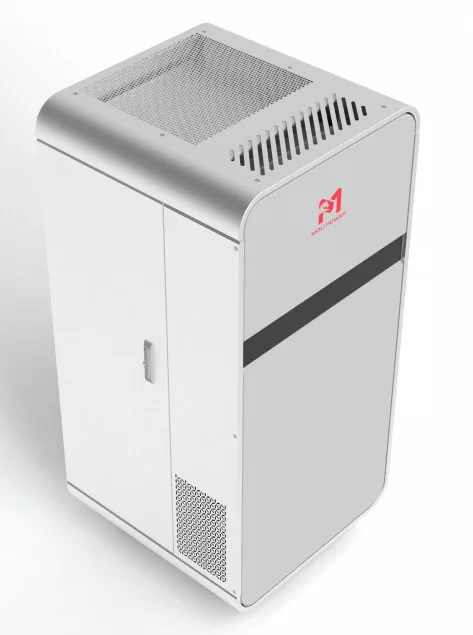
Battery Management System: Technical Overview for Energy Storage Integration
A Battery Management System, or BMS, is the electronic control system responsible for monitoring, protecting, estimating, and managing lithium-ion battery packs in energy storage applications. It serves as the core interface between battery cells and the PCS, EMS, and monitoring platforms. The BMS continuously measures cell voltage, pack current, temperature, insulation resistance, and relay status. Based on these measurements, it estimates state of charge, state of health, state of power, and remaining energy. Accurate SOC and SOH estimation are essential for safe operation, capacity planning, and long-term system reliability. Safety protection is one of the primary functions of a BMS. It detects overcharge, over-discharge, overcurrent, short circuit, overtemperature, low temperature, and insulation faults, and triggers alarms, power limitation, or contactor disconnection when thresholds are exceeded. Cell balancing is used to reduce voltage and capacity mismatch among cells, helping maintain usable capacity and extending cycle life. BMS architectures are commonly classified into centralized and distributed topologies. Centralized designs are often used in residential and small commercial systems, while distributed master-slave architectures are more common in high-voltage racks, containerized systems, and large-scale installations. Communication with external devices is typically implemented through CAN, RS485, Modbus, or proprietary protocols. In energy storage integration, BMS compatibility with the PCS and EMS is critical. The PCS relies on BMS data to adjust charge and discharge power, while the EMS uses SOC, SOH, and fault status for dispatch scheduling. Mismatched communication protocols or control logic can cause commissioning delays and operational instability. For international projects, BMS evaluation may reference IEC 62619 for industrial lithium battery safety, UL 1973 for stationary battery systems, UL 9540 for energy storage system safety, and functional safety standards such as ISO 26262 for automotive-grade designs. Product selection should consider voltage range, cell chemistry, topology, communication protocol, protection logic, sampling accuracy, and integration requirements.
China XINYA Power Cables Co., Ltd Email: [email protected] whatsapp: +86 15289885778 Website: https://www.esspow.com