Battery Module: Technical Overview for Energy Storage and Industrial Systems
battery module, lithium battery module, BESS battery module, energy storage battery module, industrial battery module
By Xinya Power editorial team
Battery Module: Technical Overview for Energy Storage and Industrial Systems
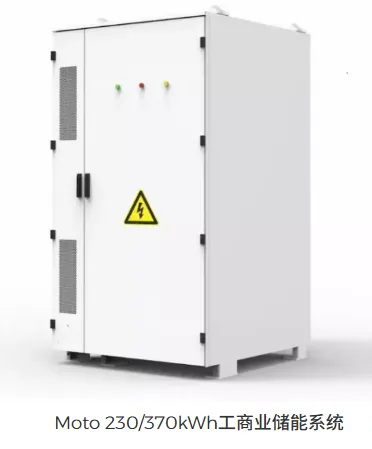
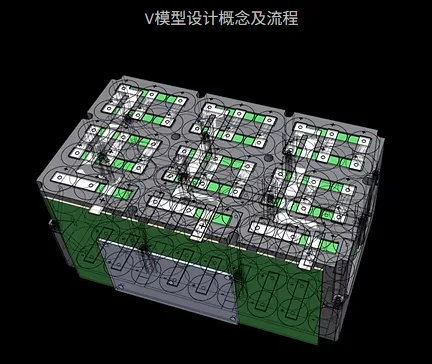
A battery module is a standardized assembly formed by connecting multiple battery cells in series, parallel, or series-parallel configurations, together with structural supports, electrical interconnects, thermal management components, and monitoring interfaces. It serves as an intermediate building block between individual cells and complete battery packs, racks, or containerized energy storage systems. Modules are widely used in stationary energy storage systems, commercial and industrial installations, electric vehicles, uninterruptible power supplies, telecommunications, and renewable energy integration. By grouping cells into modules, manufacturers can improve mechanical protection, simplify thermal management, enable easier maintenance, and support scalable system design. A typical battery module includes prismatic, cylindrical, or pouch cells arranged within a rigid frame or enclosure. Busbars or flexible connectors provide low-resistance electrical paths, while thermal pads, cooling plates, or air channels help maintain uniform cell temperature. Many modules also integrate temperature sensors, voltage sampling points, and communication interfaces for connection to a battery management system. The BMS monitors cell voltage, current, temperature, state of charge, and state of health, and provides protection against overcharge, over-discharge, overcurrent, short circuit, and thermal faults. Thermal management is critical because uneven temperature distribution can accelerate aging and reduce available capacity. Relevant standards include IEC 62619 for industrial lithium battery safety, UL 1973 for stationary battery modules and racks, UL 9540 for energy storage system safety, and UL 9540A for thermal runaway propagation testing. Key technical parameters include nominal voltage, rated capacity, energy density, continuous and peak current, internal resistance, operating temperature range, cycle life, depth of discharge, enclosure protection rating, and communication protocol. Module selection should be based on system voltage architecture, power requirements, cooling method, installation environment, safety certification, and compatibility with the overall battery management and power conversion design. Keywords: battery module, lithium battery module, BESS battery module, energy storage battery module, industrial battery module
China XINYA Power Cables Co., Ltd Email: [email protected] whatsapp: +86 15289885778 Website: https://www.esspow.com