DC Distribution Cabinet: Technical Overview for Energy Storage and Industrial Power Systems
DC distribution cabinet, DC distribution panel, energy storage DC cabinet, DC power distribution cabinet, battery DC distribution system
By Xinya Power editorial team
DC Distribution Cabinet: Technical Overview for Energy Storage and Industrial Power Systems
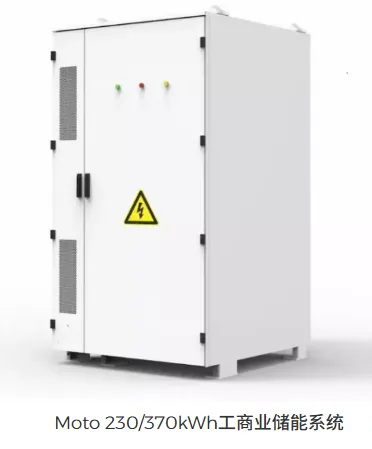
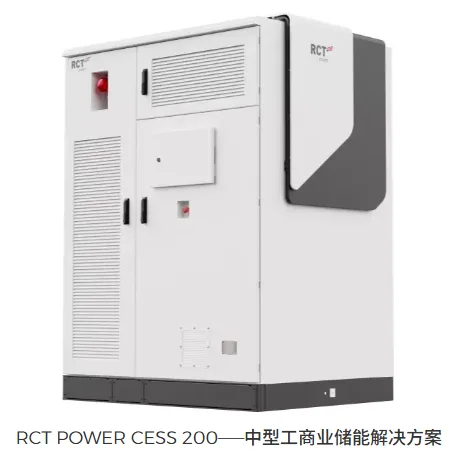
A DC distribution cabinet is an electrical assembly used to distribute, protect, monitor, and control direct current power in energy storage, industrial, and renewable energy systems. It is typically installed between battery clusters, DC converters, PCS units, PV arrays, DC loads, and DC busbars. In battery energy storage systems, the DC distribution cabinet collects and distributes current from multiple battery strings or battery clusters. It commonly includes DC circuit breakers, fuses, contactors, precharge circuits, shunts, surge protection devices, insulation monitoring, and communication interfaces. The precharge circuit limits inrush current when the system is energized, while the DC breaker or fuse provides overcurrent and short-circuit protection for battery strings and downstream equipment. The cabinet also supports system-level monitoring. Voltage, current, insulation status, breaker position, and temperature signals can be transmitted to the BMS, PCS, EMS, or SCADA platform through CAN, RS485, or Modbus interfaces. This helps operators identify abnormal strings, verify protection status, and reduce maintenance time. Typical DC distribution cabinets are rated for 400 V, 750 V, 1000 V, or 1500 V DC, depending on battery configuration and system design. Enclosures are often rated IP54 or higher for industrial and outdoor applications, with separate compartments for power circuits, control circuits, and communication modules to improve safety and service access. For international projects, DC distribution cabinets may reference IEC 61439 for low-voltage switchgear and controlgear assemblies, IEC 62619 for industrial lithium battery safety, UL 508A for industrial control panels, and UL 891 for low-voltage switchboards where applicable. System-level integration may also align with UL 9540 and UL 9540A for energy storage system safety and fire propagation assessment. Product selection should consider system voltage, rated current, number of input and output circuits, short-circuit withstand capability, precharge function, insulation monitoring, enclosure protection rating, communication protocol, cooling conditions, and compatibility with the battery pack, PCS, and EMS.
China XINYA Power Cables Co., Ltd Email: [email protected] whatsapp: +86 15289885778 Website: https://www.esspow.com