Batteries and Cells: Technical Overview for Energy Storage Systems
batteries and cells, lithium iron phosphate cell, LFP battery cell, energy storage battery cell, stationary battery module
By Xinya Power editorial team
Batteries and Cells: Technical Overview for Energy Storage Systems
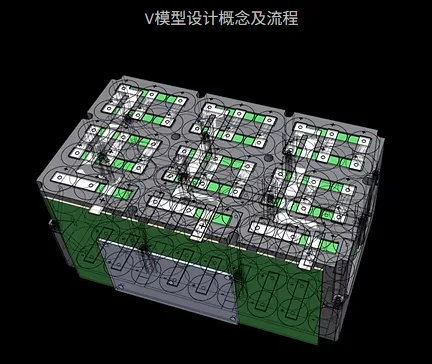
Batteries and cells form the energy storage medium in a battery energy storage system. A cell is the smallest electrochemical unit, while modules, racks, and packs are built from cells through series and parallel connections. System performance depends not only on cell chemistry, but also on mechanical design, thermal management, BMS protection, and integration quality. Lithium iron phosphate cells are now the dominant chemistry for stationary storage. LFP offers strong thermal stability, long cycle life, cobalt-free materials, and relatively stable raw material supply, making it suitable for daily cycling applications. Nickel manganese cobalt cells provide higher energy density, but are more commonly used where space and weight are more constrained. In stationary BESS projects, safety margin, cycle life, and total cost of ownership usually carry more weight than volumetric energy density. Cell format also affects system design. Prismatic cells are widely used in large-format stationary storage because they support high capacity, compact packing, and efficient liquid cooling. Cylindrical cells offer mature manufacturing and good mechanical consistency, while pouch cells can achieve high packaging efficiency but require careful mechanical restraint. The choice influences module layout, cooling path, busbar design, and maintenance strategy. Key cell parameters include nominal voltage, capacity, energy density, internal resistance, continuous and peak current, cycle life, calendar life, operating temperature range, self-discharge rate, and safety behavior under overcharge, short circuit, and thermal abuse. Module and pack design should address cell-to-cell consistency, voltage and temperature sampling, equalization strategy, insulation, sealing, vibration resistance, and service access. For international projects, cell and battery evaluation may reference IEC 62619 for industrial lithium battery safety, UL 1973 for stationary battery systems, UL 9540 for system-level safety, UL 9540A for thermal runaway fire propagation assessment, and UN 38.3 for transport safety. Proper selection should be coordinated with the BMS, thermal management system, PCS, EMS, and site electrical design.
China XINYA Power Cables Co., Ltd Email: [email protected] whatsapp: +86 15289885778 Website: https://www.esspow.com