Dielectric Loss: Technical Overview for Cable Insulation Efficiency
dielectric loss, dissipation factor tan δ, cable insulation loss, IEC 60502 tan δ, XLPE dielectric loss
By Xinya Power editorial team
Dielectric Loss: Technical Overview for Cable Insulation Efficiency
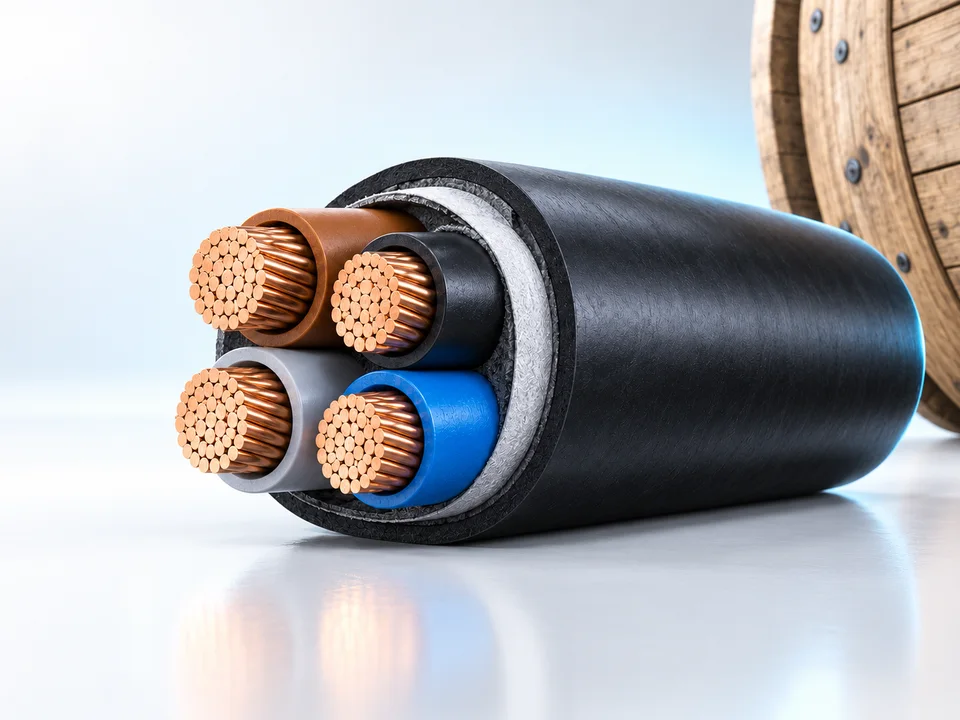
Dielectric loss refers to the energy dissipated as heat within a cable’s insulation material when subjected to an alternating electric field. It is a critical parameter for medium- and high-voltage cables, as excessive dielectric loss can lead to thermal instability, insulation aging, and reduced service life. The magnitude of dielectric loss is quantified by the dissipation factor (tan δ), which represents the ratio of resistive current to capacitive current in the insulation. The dissipation factor depends primarily on the insulation material. Cross-linked polyethylene (XLPE) exhibits very low tan δ values (typically <0.001), making it suitable for high-voltage applications. In contrast, PVC and older paper-insulated cables have higher dielectric losses, limiting their use at elevated voltages. Dielectric loss increases with operating voltage, frequency, and temperature. Key parameters include insulation material type, operating voltage, system frequency, ambient and conductor temperature, and insulation thickness. For international projects, dielectric loss and tan δ measurements are specified in IEC 60502, IEC 60840, and IEC 60287 standards. Manufacturers measure tan δ during type tests and routine quality checks to verify insulation purity and manufacturing consistency. Low dielectric loss confirms high-quality insulation and supports efficient power transmission with minimal energy waste. Accurate tan δ data is essential for thermal rating calculations and long-term reliability assessment in transmission and distribution networks.
China XINYA Power Cables Co., Ltd Email: [email protected] Email: [email protected] whatsapp: +86 15289885778 Website: https://www.power-cables.com